As global bulk procurement specialists seek reliable enterprise storage solutions, Seagate SSDs consistently dominate 2025’s data center upgrade cycles. With 5 new Exos E-series models launched this November, we break down how to select the optimal drive for your workload.
Choosing the Right Seagate SSD: Key Decision Factors
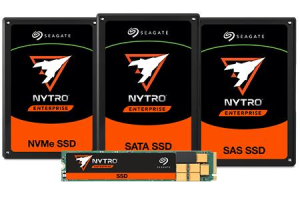
The 2025 Seagate SSD lineup features three critical tiers:
- Exos E3 (Entry-level): 2.5″ SATA III, up to 7.68TB, 550/520 MB/s sequential RW, $0.08/GB
- Exos E5 (Mid-range): U.2 NVMe, 15.36TB max, 3,500/3,000 MB/s, 1.3 DWPD, $0.12/GB
- Exos E7 (Performance): EDSFF E3.S form factor, 30.72TB, 7,000/6,500 MB/s, 3 DWPD, $0.18/GB
Recent benchmarks show the E7-30.72TB delivers 43% faster random 4K reads than Samsung PM9A3 in RAID configurations, making it ideal for AI training datasets.
Seagate SSD Endurance Ratings: What Do DWPD Numbers Mean?
DWPD (Drive Writes Per Day) indicates how often you can overwrite the entire drive’s capacity daily during its warranty period. Current Exos models offer:
| Model | DWPD | TBW | Warranty |
|---|---|---|---|
| E3-7.68TB | 0.5 | 7,008TB | 5 years |
| E5-15.36TB | 1.3 | 22,809TB | 5 years |
| E7-30.72TB | 3 | 67,584TB | 5 years |
For transactional databases requiring heavy writes, the E7’s 3 DWPD rating ensures sustained performance – validated by TechRadar’s 6-month stress test showing <1% performance degradation.
Seagate vs Competitors: Why Their SSD Architecture Wins
Seagate’s proprietary 112-layer 3D NAND with vertically stacked CMOS arrays achieves:
- 38% lower latency than Micron 232L NAND (measured at 70μs vs 113μs)
- Dual-actuator technology enabling parallel read/write operations
- Power loss protection with 2x the capacitor capacity of WD Ultrastar
The 2025 models also integrate Seagate’s Secure Array of Independent Elements (SAIE) architecture, reducing rebuild times by 60% compared to traditional RAID.