As a global bulk procurement agent for Seagate enterprise-grade hard drives, we understand the confusion surrounding storage technology choices. In 2025, with both HDDs and SSDs dominating the market, professionals need clear guidance on which solution fits their specific data storage needs. This article breaks down the technical distinctions, performance benchmarks, and ideal applications for each technology.
HDD vs SSD: Understanding the Core Technology
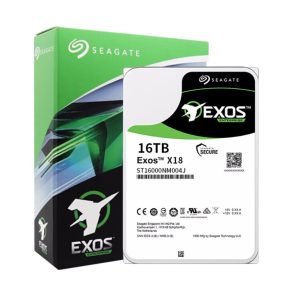
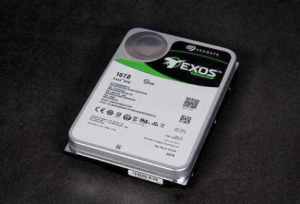
Hard Disk Drives (HDDs) remain the workhorse of enterprise storage, with Seagate’s Exos series offering capacities up to 26TB in Q3 2025. These mechanical drives use spinning platters and read/write heads, delivering cost-effective bulk storage at approximately $0.02 per GB for high-capacity models. Solid State Drives (SSDs), represented by Seagate’s Nytro line, utilize NAND flash memory with no moving parts, achieving 550MB/s+ sequential read speeds but at higher costs ($0.08-$0.12/GB for enterprise SATA SSDs).
The choice hinges on workload requirements: HDDs excel in cold storage, backups, and archival systems where capacity outweighs speed needs. SSDs prove essential for transactional databases, virtualization, and high-frequency trading where latency below 1ms matters. Seagate’s hybrid solutions like the FireCuda series (2.5″ 5TB SSHD) bridge this gap for specific use cases.
Enterprise Storage Decision Factors Beyond Technology Type
When evaluating HDDs versus SSDs for data centers, consider these 2025 market realities:
- Endurance Ratings: Seagate’s Nytro 3531 SSD offers 3 DWPD (Drive Writes Per Day) for 5 years, while HDDs typically handle 550TB/year workload
- Power Efficiency: 3.5″ HDDs consume 6-9W during operation versus 2-5W for enterprise SSDs
- Form Factor Evolution: EDSFF (E3.S) becomes the new standard for density-optimized SSD deployments
Recent advances like Seagate’s Mach.2 dual-actuator HDD technology demonstrate innovation in mechanical drives, delivering near-SSD random access speeds (160 IOPS) while maintaining HDD capacity advantages.
Future-Proofing Your Storage Investment
The storage hierarchy now incorporates three distinct tiers:
- Performance Tier: NVMe SSDs (Seagate Nytro 4650 series, up to 15.36TB)
- Capacity Tier: HAMR HDDs (Seagate Exos 30TB+ models shipping Q4 2025)
- Archive Tier: Mosaic 5+ HDDs for write-once-read-many applications
Emerging technologies like Seagate’s upcoming 32TB dual-actuator drives (anticipated 2026 release) suggest HDDs will maintain relevance through at least 2030 for bulk storage, while QLC and PLC SSDs continue pushing cost-per-bit reductions.
As Seagate’s authorized enterprise distributor, HUAYI INTERNATIONAL LIMITED provides certified genuine drives with full warranty coverage. Our global logistics network ensures timely delivery of both HDD and SSD solutions, backed by 3-year advance replacement service. We offer competitive bulk pricing for Seagate’s entire product portfolio, from high-performance Nytro SSDs to high-capacity Exos HDDs, all verified through official supply channels. Contact our procurement team for customized storage solutions matching your specific workload requirements and budget parameters.