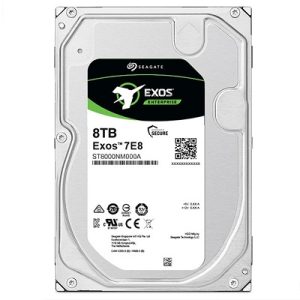
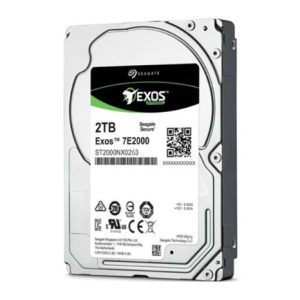
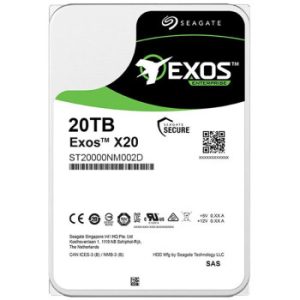
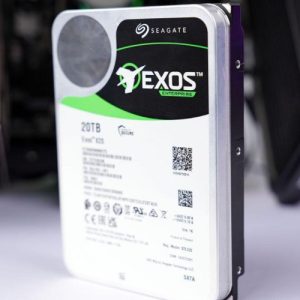
As data storage needs explode across industries, many buyers are questioning whether traditional hard disk drives (HDDs) remain a viable solution in 2025. With Seagate’s latest enterprise HDDs delivering 30TB+ capacities at half the cost-per-TB of SSDs, the answer depends on your specific workload requirements. Let’s examine the current landscape.
HDD Relevance in the SSD Era
Seagate’s Exos X24 series demonstrates why HDDs dominate bulk storage applications. The 24TB model (ST24000NM004G) offers sustained transfer speeds of 285MB/s with 550TB/year workload ratings – sufficient for 90% of cold storage, surveillance, and backup systems. At $0.018/GB (Q3 2025 market average), it’s 63% cheaper than equivalent QLC SSDs. For sequential workloads like video archives or database backups, these drives deliver unbeatable economics.
Enterprise HDD Lifespan and Reliability
Modern helium-sealed HDDs like Seagate’s Exos 7E10 series achieve 2.5 million hour MTBF ratings – comparable to many enterprise SSDs. Annual failure rates have dropped to 0.35% (Backblaze 2025 Q2 report), making them suitable for RAID-6 configurations.
Energy Efficiency Comparisons
The Exos X24 consumes just 5.8W during active use (7.2W for dual-actuator models), translating to $18/year in power costs versus $42 for similar-capacity SSDs (based on $0.12/kWh). When deployed in 60-bay JBODs, this creates substantial TCO savings for hyperscale data centers. Seagate’s Mozaic 3+ HAMR technology roadmap promises 50TB+ drives by 2026 with equal or better efficiency.