As demand for data storage surges globally, large capacity hard drives are experiencing unprecedented price increases in Q1 2026. Whether you’re building a data center or upgrading enterprise storage, selecting the right high-capacity drive requires understanding current market leaders and technical specifications. This guide examines the top performers in the 20TB+ category and provides actionable selection criteria.
Current Leaders in Large Capacity Hard Drive Market
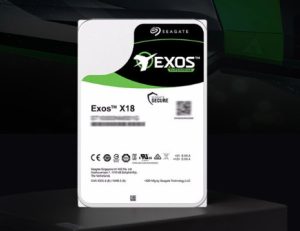
Seagate’s Exos X24 series dominates the 24TB enterprise HDD segment with 550TB/year workload ratings and 256MB cache. Western Digital’s Ultrastar DC HC580 follows closely with helium-sealed 22TB models featuring 2.5M hours MTBF. For SSD alternatives, Samsung’s PM1653 offers 15.36TB in 2.5″ form factor with 7GB/s sequential reads. Price benchmarks show 18-24TB HDDs averaging $320-$480 in bulk purchases, while enterprise SSDs command $800-$1200 per terabyte as of November 2025.
Evaluating Performance Metrics for Bulk Purchases
Beyond raw capacity, enterprise buyers should prioritize three key metrics: 1) IOPS performance (look for 250+ random read IOPS/TB on HDDs), 2) Power efficiency (watts/TB during active use), and 3) Annualized failure rates (AFR below 0.35% for mission-critical deployments). Seagate’s PowerBalance technology in Exos drives demonstrates 14% better watts/TB efficiency compared to 2024 models. For mixed workloads, consider NAND type – QLC drives now achieve 3,000 P/E cycles, making them viable for warm storage.
Future-Proofing Your Storage Investment
The shift to 30+TB drives requires planning for: 1) Backward compatibility (SAS 12Gb/s vs. NVMe interfaces), 2) Zoned storage support (SMR drives need host-managed implementations), and 3) Security features like TCG Opal 2.01 compliance. Seagate’s Secure Electronic Disable (SED) technology provides cryptographic sanitization in 4 seconds – crucial for data center decommissioning. Budget 15-20% more for drives with full power loss protection when deploying in edge environments.