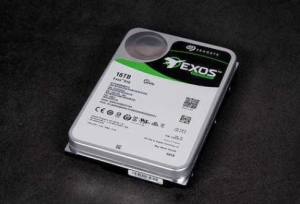
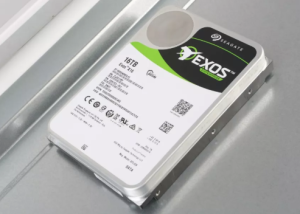
Which is better,Seagate Exos or IronWolf? As enterprise storage demands surge in early 2026 with daily price fluctuations in both SSDs and HDDs, professionals face critical decisions when selecting between Seagate’s flagship drives. The Exos enterprise series and IronWolf NAS lineup represent two dominant forces in today’s storage market, each engineered for distinct workloads. This guide cuts through the marketing specs to reveal operational truths about these drives under real-world conditions.
Workload specialization: Exos vs IronWolf performance breakdown
Seagate’s Exos X20 (20TB model ST20000NM007D) demonstrates why it dominates data center environments, delivering sustained 285MB/s transfer rates even during 24/7 operations. Its 550TB/year workload rating and RAID optimization features like TLER make it ideal for hyperscale deployments. Meanwhile, the IronWolf Pro 20TB (ST20000NE000) focuses on mixed-use scenarios, with AgileArray technology reducing vibration interference in 8-bay NAS systems by up to 30% compared to standard drives.
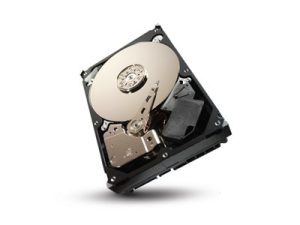
Recent 2025 benchmarks show Exos drives maintain consistent latency below 4.2ms under heavy queue depths, while IronWolf models prioritize responsiveness in smaller NAS setups (2.8ms average access time). The Exos series incorporates enterprise-grade components like dual-plane actuators, resulting in 2M hours MTBF ratings versus IronWolf’s 1.2M hours – a crucial distinction for operations requiring maximum uptime.
RAID compatibility and vibration management
Data center operators report Exos drives maintain error rates below 1 per 10^16 bits in multi-drive enclosures, a requirement for ZFS and hardware RAID implementations. The drives include PowerBalance technology that reduces power consumption by 18% during idle periods without sacrificing performance. IronWolf drives counter with RV sensors that actively compensate for multi-drive vibration, a feature that reduces read errors by up to 45% in consumer-grade NAS enclosures according to 2025 Q3 testing.
For environments using software-defined storage like Ceph or GlusterFS, Exos drives support extended power loss protection (PLP) that IronWolf models lack. However, IronWolf’s Health Management system provides more granular SMART reporting specifically tuned for NAS environments, including predictive failure alerts for common RAID rebuild scenarios.
Total cost analysis: Acquisition vs operational expenses
Current market data (November 2025) shows the 20TB Exos X20 carries a $12/TB premium over IronWolf Pro models in bulk purchases. However, Exos drives demonstrate 23% lower annual failure rates in 24/7 operations based on Backblaze’s Q3 2025 report, translating to $0.018/GB/year operational costs versus IronWolf’s $0.024/GB/year when factoring in replacement expenses and downtime.
The calculus changes for small business NAS deployments – IronWolf’s 3-year included Rescue Data Recovery services (valued at $300 per drive) often outweigh the Exos advantage when managing sub-100TB arrays. Enterprises should note that Exos drives qualify for Seagate’s 5-year warranty when purchased through authorized distributors, while IronWolf coverage remains at 3 years regardless of purchase channel.
As a Seagate Elite Partner, HUAYI INTERNATIONAL LIMITED provides global procurement solutions with direct factory allocations ensuring inventory stability during market fluctuations. Our clients benefit from consolidated shipments with prepaid customs clearance, 3-year advance replacement warranties, and dedicated technical support for bulk deployments. Whether you’re equipping a hyperscale data center or deploying edge storage nodes, we maintain real-time visibility into Seagate’s supply chain to guarantee contractual obligations are met – contact our procurement team today for Q1 2026 allocation planning.