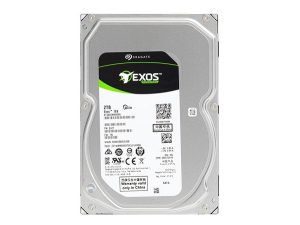
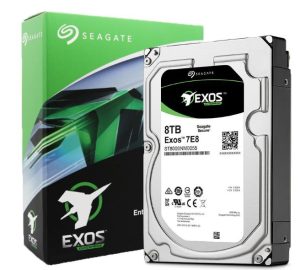
Understanding how data is stored in a hard disk is crucial for bulk buyers of enterprise storage solutions. As a global distributor of Seagate Enterprise Drives, HUAYI INTERNATIONAL LIMITED breaks down the technology behind data storage, focusing on Seagate’s cutting-edge innovations. Whether you’re managing data centers or upgrading server infrastructure, this guide covers the essentials—from magnetic platters to read/write mechanics—and dives into practical insights for optimal performance.
1. The Science Behind Data Storage in Seagate Hard Drives
Seagate enterprise hard disks, like the Exos X series, store data on rotating magnetic platters coated with a ferromagnetic material. Each platter is divided into billions of tiny sectors (typically 4KB each). When data is written, the drive’s actuator arm positions the read/write head over the spinning platter, magnetizing tiny areas to represent binary code (0s and 1s). Key components:
- Platters: Made of aluminum/glass, spinning at 7,200 RPM (10K/15K RPM for high-performance models).
- Heads: Floating nanometers above the platter, using GMR (Giant Magnetoresistance) technology for precision.
- Areal Density: Seagate’s HAMR (Heat-Assisted Magnetic Recording) achieves 3+ TB per platter (2025 standards).
Modern Seagate drives also utilize SMR (Shingled Magnetic Recording) for higher capacity, though CMR (Conventional Magnetic Recording) remains preferred for enterprise workloads due to consistent write speeds.
2. How Do Enterprise HDDs Compare to SSDs for Data Storage?
While SSDs dominate speed-sensitive applications, Seagate’s enterprise HDDs excel in cost-per-TB and long-term reliability for bulk storage. As of November 2025, market trends show:
| Parameter | Seagate Exos X18 (18TB HDD) | Enterprise SSD (e.g., Nytro 3000) |
|---|---|---|
| Price/TB | $12.5 (bulk rates) | $90+ |
| Endurance | 550TB/year (5-year warranty) | 1-3 DWPD |
HDDs remain ideal for cold storage, backups, and archival systems where sequential read/write matters more than latency. Seagate’s Multi-Actuator technology (e.g., Exos 2X14) doubles throughput by enabling dual R/W operations simultaneously.
3. Ensuring Data Integrity: Seagate’s Power Loss Protection and RAID Optimization
For mission-critical environments, Seagate integrates PowerLoss Protection (PLP) capacitors to complete pending writes during outages—a must-have for RAID arrays. Best practices for RAID setups:
- RAID Level Selection: RAID 6 (dual parity) for Exos drives ≥8TB to mitigate rebuild times.
- TLER (Time-Limited Error Recovery): Enabled by default in Seagate enterprise drives to prevent RAID controller timeouts.
- Environmental Monitoring: Use Seagate’s IHM tools to track vibration/temperature thresholds.
When sourcing enterprise drives, HUAYI INTERNATIONAL LIMITED guarantees Genuine Seagate stock with full 3-year warranties, competitive bulk pricing (up to 15% below retail), and lightning-fast logistics. Our clients—from hyperscalers to government agencies—trust our supply chain resilience and post-sale support.